
شنیدن و نگهداشتن این اپیزود
پخش را شروع کن؛ هنگام رفتن به صفحههای دیگر هم ادامه پیدا میکند.
برای خواندن و مرور دوباره
گفتوگو را به متن همراهت تبدیل کن
متن کامل و خوانای این اپیزود در Word و PDF، همراه با نقشهٔ تصویری موضوعات.
کتابخانه و بازخورد
برای شناخت بهتر پیش از شنیدن
این اپیزود هنوز بررسی عمیق نشده است
در اپیزودهای بررسیشده، پادگرد خلاصه، محورهای گفتگو، فصلهای قابل پخش و پرسشهای مهم را از متن اپیزود استخراج میکند.
تحلیل این اپیزودتکمیل این اپیزود
اگر مهمان یا اسپانسری جا افتاده، از فهرست موجود انتخاب کن یا نام تازهای پیشنهاد بده. پیشنهادها بعد از بررسی مدیر عمومی میشوند.
متن منتشرشده توسط پادکستر
توضیحات اپیزود
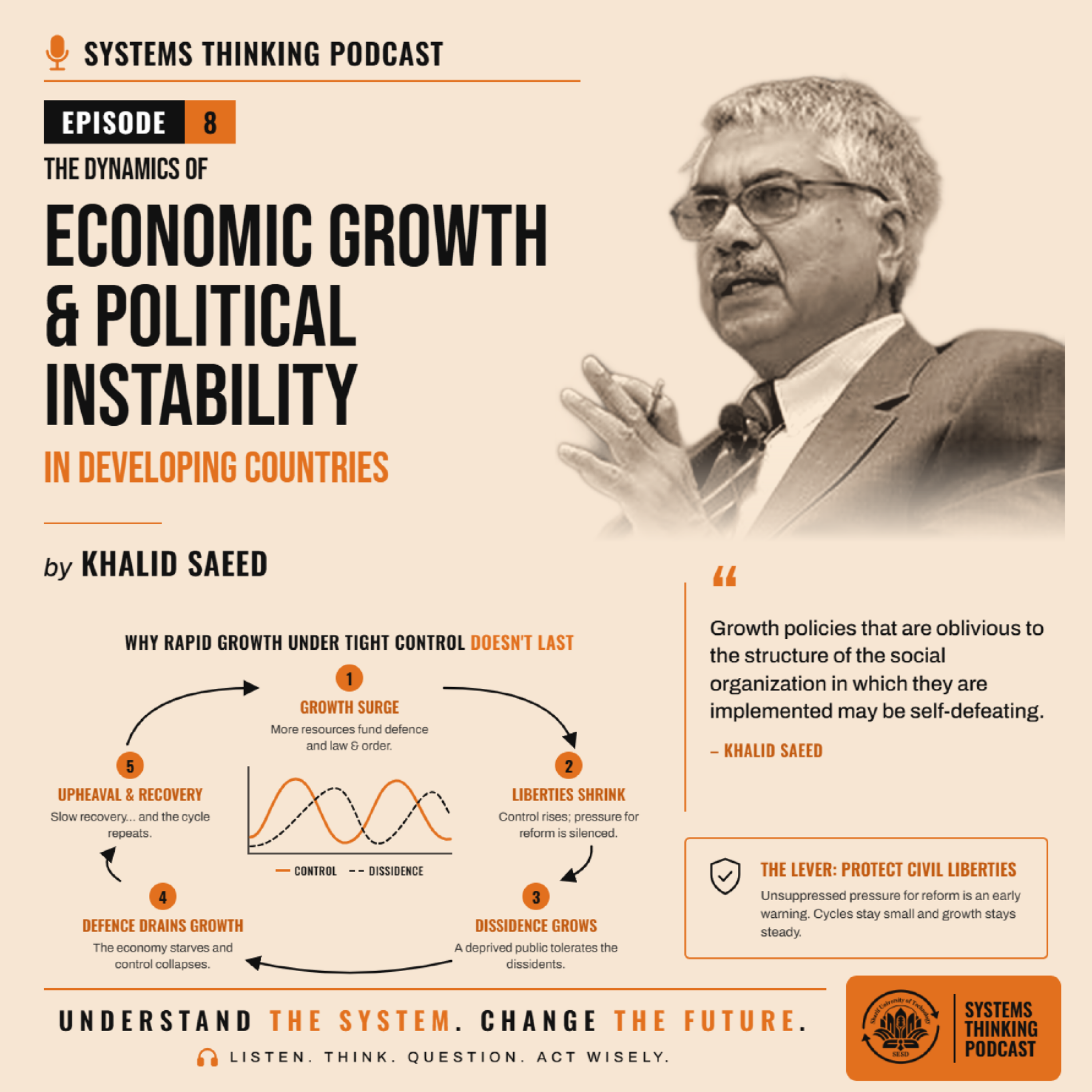
What if the policies meant to accelerate growth are the same ones that interrupt it? In The Dynamics of Economic Growth and Political Instability in Developing Countries , Khalid Saeed asks why rapid economic growth so often ends in political upheaval. Rather than blaming personalities or bad luck, he models the socio-political system as a structure of roles: a government seeking to hold power, dissidents seeking to take it, and a public seeking welfare without a say in how it arrives. Simulation reveals a cycle. Growth gives a government the resources to expand control; control narrows civil liberties and deepens deprivation; deprivation feeds dissidence; and containing dissidence drains the very resources growth was meant to build. Stability of this kind can look impressive for a while, yet it carries the conditions of its own interruption. In this episode of the Systems Thinking Podcast, we explore why political stability and economic growth are not the simple pair they appear to be, what it means for a growth policy to defeat itself, and why recognizing structure matters more than predicting events. Article: Saeed, K. (1986). The dynamics of economic growth and political instability in developing countries. System Dynamics Review , 2(1), 20–35. 📖 You can find the full article at the link below: https://onlinelibrary.wiley.com/doi/abs/10.1002/sdr.4260020103
نظرها
هنوز نظری نوشته نشده.