
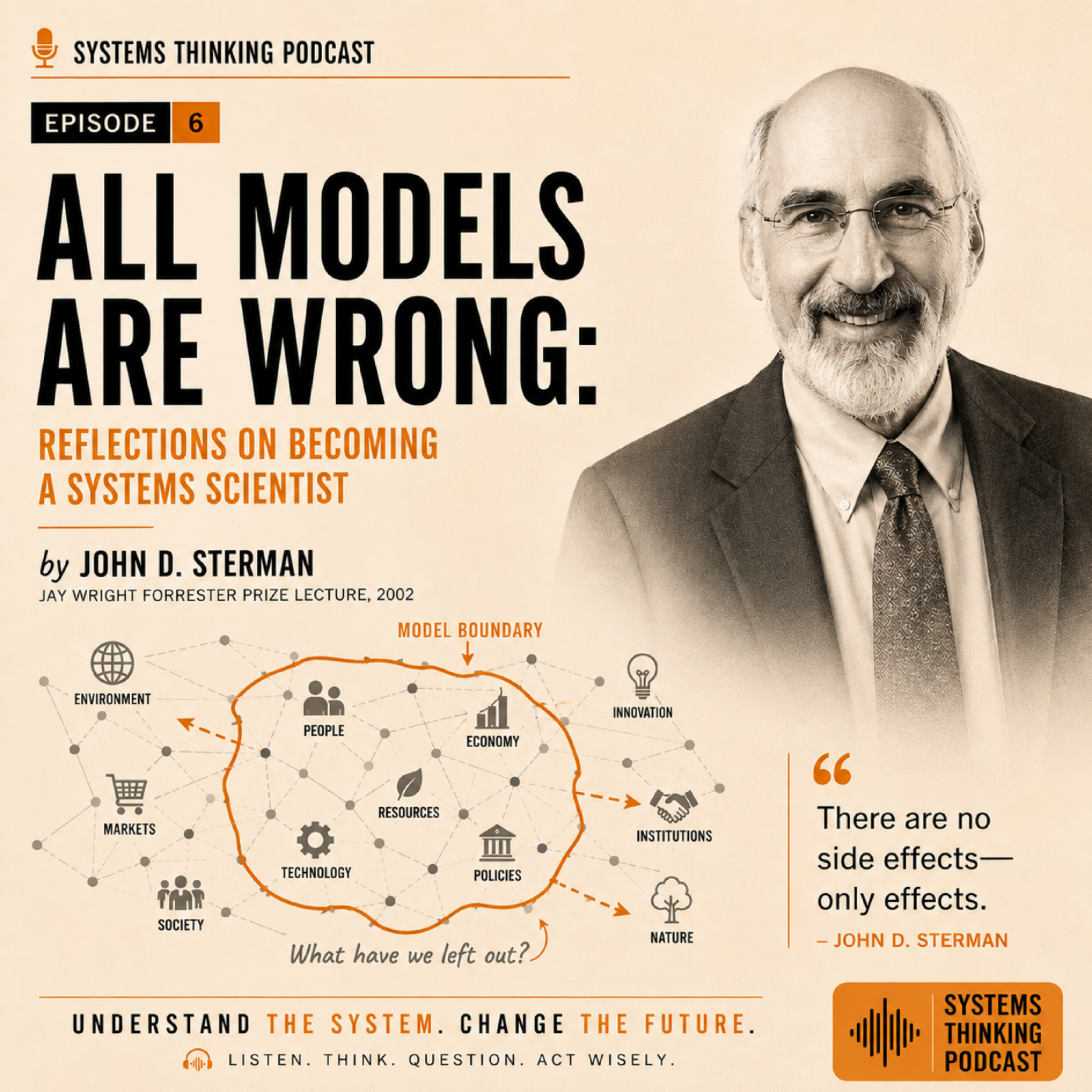
Wrong, but Useful: Learning to Think Like a Systems Scientist
۲۳ مرداد ۱۴۰۵ · 25 دقیقه
شنیدن و نگهداشتن این اپیزود
پخش را شروع کن؛ هنگام رفتن به صفحههای دیگر هم ادامه پیدا میکند.
برای خواندن و مرور دوباره
گفتوگو را به متن همراهت تبدیل کن
متن کامل و خوانای این اپیزود در Word و PDF، همراه با نقشهٔ تصویری موضوعات.
کتابخانه و بازخورد
برای شناخت بهتر پیش از شنیدن
این اپیزود هنوز بررسی عمیق نشده است
در اپیزودهای بررسیشده، پادگرد خلاصه، محورهای گفتگو، فصلهای قابل پخش و پرسشهای مهم را از متن اپیزود استخراج میکند.
تحلیل این اپیزودتکمیل این اپیزود
اگر مهمان یا اسپانسری جا افتاده، از فهرست موجود انتخاب کن یا نام تازهای پیشنهاد بده. پیشنهادها بعد از بررسی مدیر عمومی میشوند.
متن منتشرشده توسط پادکستر
توضیحات اپیزود
What does it really mean to think in systems? In All Models Are Wrong: Reflections on Becoming a Systems Scientist , John D. Sterman argues that understanding feedback loops, stocks and flows, delays, and simulation is only part of the journey. Systems thinking also requires something more difficult: questioning the boundaries we draw around problems, uncovering the assumptions hidden inside our models, listening seriously to perspectives different from our own, and accepting that no model—formal or mental—can ever fully capture reality. In this episode of the Systems Thinking Podcast , we explore Sterman’s reflections on what it takes to become a better systems thinker, and why recognizing that our models are wrong is not a weakness, but the beginning of learning. Article: Sterman, J. D. (2002). All models are wrong: Reflections on becoming a systems scientist . System Dynamics Review, 18 (4), 501–531. 📖 You can read the full article at the link below: https://onlinelibrary.wiley.com/doi/abs/10.1002/sdr.261
نظرها
هنوز نظری نوشته نشده.