شنیدن و نگهداشتن این اپیزود
پخش را شروع کن؛ هنگام رفتن به صفحههای دیگر هم ادامه پیدا میکند.
برای خواندن و مرور دوباره
گفتوگو را به متن همراهت تبدیل کن
متن کامل و خوانای این اپیزود در Word و PDF، همراه با نقشهٔ تصویری موضوعات.
کتابخانه و بازخورد
برای شناخت بهتر پیش از شنیدن
این اپیزود هنوز بررسی عمیق نشده است
در اپیزودهای بررسیشده، پادگرد خلاصه، محورهای گفتگو، فصلهای قابل پخش و پرسشهای مهم را از متن اپیزود استخراج میکند.
تحلیل این اپیزودتکمیل این اپیزود
اگر مهمان یا اسپانسری جا افتاده، از فهرست موجود انتخاب کن یا نام تازهای پیشنهاد بده. پیشنهادها بعد از بررسی مدیر عمومی میشوند.
متن منتشرشده توسط پادکستر
توضیحات اپیزود
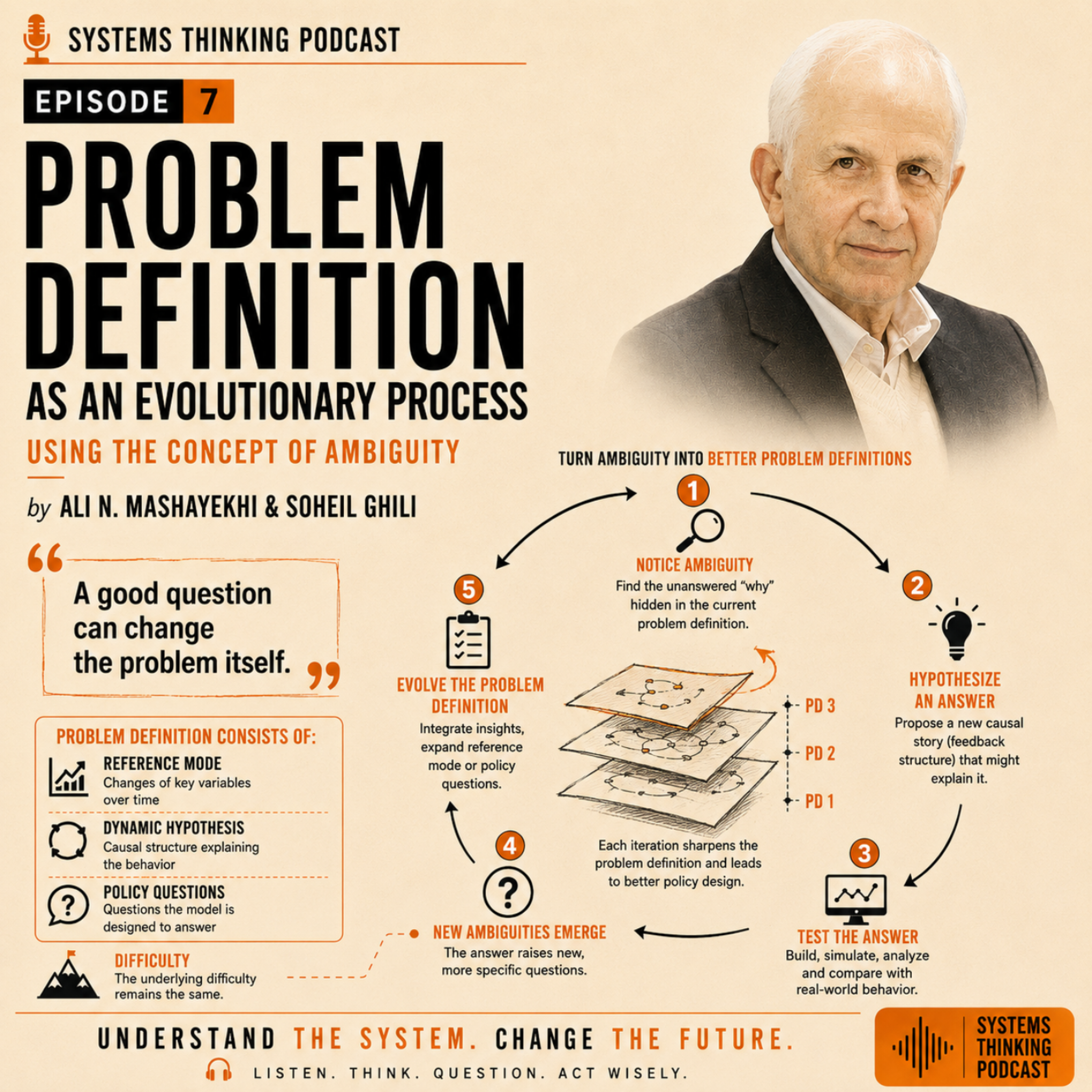
What if the problem we are trying to solve is not quite the problem we think it is? In System Dynamics Problem Definition as an Evolutionary Process Using the Concept of Ambiguity , Ali N. Mashayekhi and Soheil Ghili challenge the idea that problem definition is simply a step to complete before modeling begins. Instead, they present problem definition as an evolutionary process. Ambiguities in our understanding become questions; those questions lead to hypotheses and further investigation; and what we learn can reshape the problem itself. In this view, ambiguity is not merely something to eliminate, it can become a guide for learning. In this episode of the Systems Thinking Podcast , we explore how questioning our assumptions can lead to richer problem definitions, how modeling itself can reveal new ambiguities, and why finding a better question may sometimes matter more than rushing toward an answer. Article: Mashayekhi, A. N., & Ghili, S. (2012). System dynamics problem definition as an evolutionary process using the concept of ambiguity . System Dynamics Review, 28 (2), 182–198. 📖 You can read the full article at the link below: https://onlinelibrary.wiley.com/doi/epdf/10.1002/sdr.1469
نظرها
هنوز نظری نوشته نشده.