
شنیدن و نگهداشتن این اپیزود
پخش را شروع کن؛ هنگام رفتن به صفحههای دیگر هم ادامه پیدا میکند.
برای خواندن و مرور دوباره
گفتوگو را به متن همراهت تبدیل کن
متن کامل و خوانای این اپیزود در Word و PDF، همراه با نقشهٔ تصویری موضوعات.
کتابخانه و بازخورد
برای شناخت بهتر پیش از شنیدن
این اپیزود هنوز بررسی عمیق نشده است
در اپیزودهای بررسیشده، پادگرد خلاصه، محورهای گفتگو، فصلهای قابل پخش و پرسشهای مهم را از متن اپیزود استخراج میکند.
تحلیل این اپیزودتکمیل این اپیزود
اگر مهمان یا اسپانسری جا افتاده، از فهرست موجود انتخاب کن یا نام تازهای پیشنهاد بده. پیشنهادها بعد از بررسی مدیر عمومی میشوند.
متن منتشرشده توسط پادکستر
توضیحات اپیزود
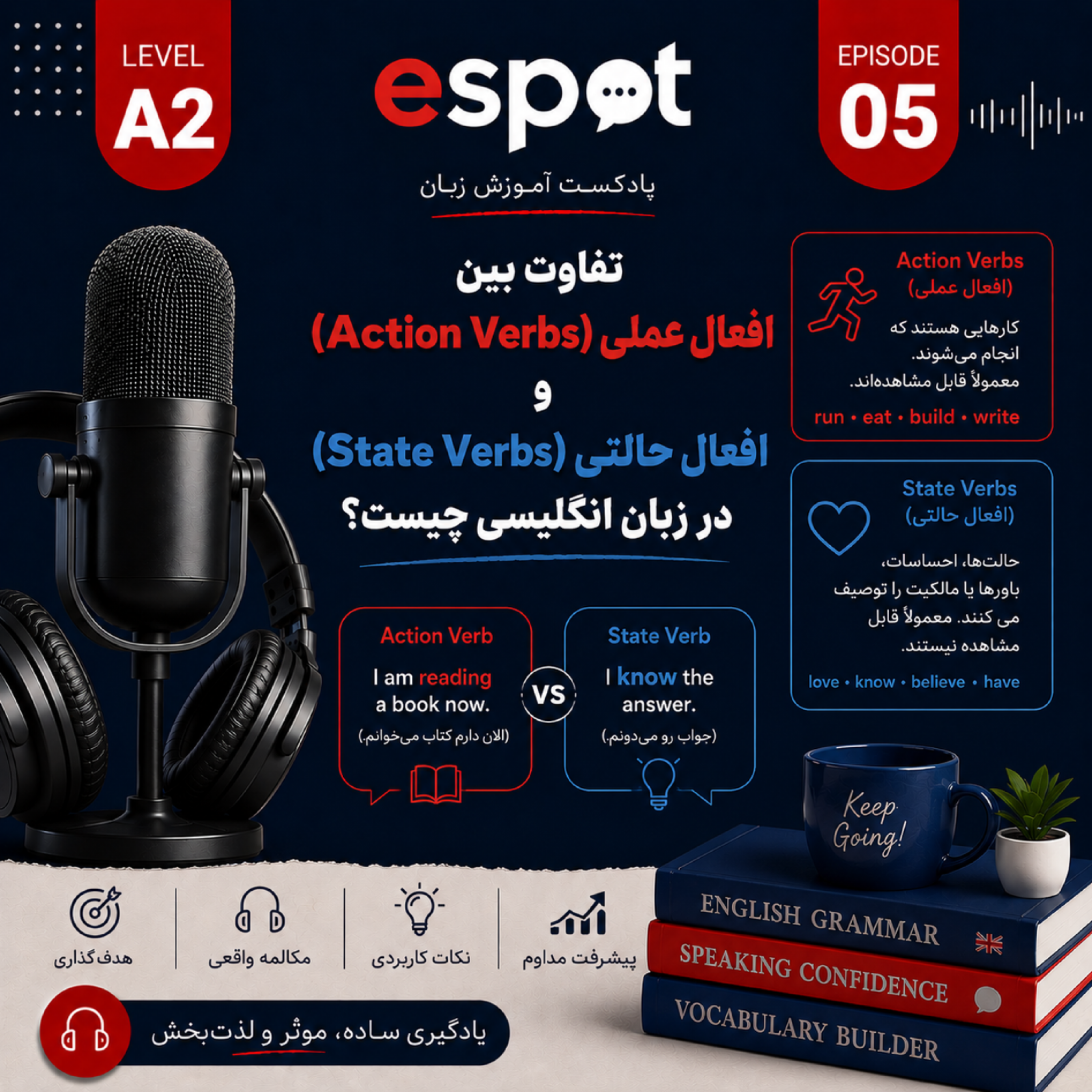
در این درس یاد میگیریم تفاوت بین افعال عملی (Action Verbs) و افعال حالتی (State Verbs) در زبان انگلیسی چیست — یعنی چه زمانی میتوان از فعل در حال استمراری (Continuous) استفاده کرد و چه زمانی نباید! 🟩 Types of Verbs (انواع فعلها در انگلیسی) You can use most verbs in the continuous form (am/is/are + verb-ing) to describe actions that are happening now. However, some verbs cannot be used in this way. These verbs are called state verbs because they describe a state (a condition, feeling, or situation), not an action. 🟩 ACTION AND STATE VERBS (افعال عملی و افعال حالتی) 🔹 Action Verbs Action verbs (افعال عملی) describe what people do — things that have a clear beginning and end, like run, eat, play, write, etc. I’m reading a book. 📖 She’s cooking dinner. 🍳 They’re playing soccer. ⚽ You can use action verbs in the present continuous because they describe actions that can be seen or heard. 🔹 State Verbs State verbs (افعال حالتی) describe conditions, emotions, thoughts, or possessions — things that are true, not actions you perform. These verbs do not normally take -ing forms because they don’t describe an ongoing action. ✳️ Common groups of state verbs: Type Examples Example Sentences Feelings / Emotions love, like, hate, prefer, want I love pizza. 🍕 / She wants a new phone. Thoughts / Opinions know, believe, remember, think (opinion), understand I know the answer. / She believes you. Possession have, own, belong I have a car. 🚗 / This phone belongs to me. Senses see, hear, smell, taste I see the bird. 🐦 / It tastes delicious. 😋 Being / Condition be, seem, look (when describing) You seem tired. / She’s beautiful. 🌸
نظرها
هنوز نظری نوشته نشده.